Mother’s Day for a Kadampa

As Kadampas who practice the Lamrim, every 21 days is Mother’s Day.  We are all quite familiar with the various contemplations of how all living beings are our mother and how kind they were to us as our mother, therefore we should develop a profound feeling of gratitude towards our mother of this life and all our mothers of our past lives.  Very often though, primarily because we make our meditations intellectual exercises of recalling certain points as opposed to exercises of the heart where we change our feelings, these contemplations on the kindness of our mother no longer really move our mind.  We might recall them, but we don’t internalize them and let them touch our heart.  On actual Mother’s Day, we should take the time to reflect deeply and sincerely upon them so that our heart moves and we genuinely feel gratitude and a wish to repay our mother’s kindness.

Have we always neglected our mothers?

I sometimes wonder if ancient Tibetan culture was the same as our modern culture.  In modern culture, particularly in modern psychology, the trend is to blame our mother for all of our problems.  We are encouraged to go back into our childhood and find all the different ways our mother made mistakes and how that is “the underlying cause” of why we are the way we are today.  We likewise completely take for granted everything our mother has done for us.  As kids, we are completely blind to it. 

We think it is “normal” that our mothers do everything for us, and we feel “justified” in getting angry with them when they don’t do it perfectly.  In truth, our mother could have just abandoned us on the street.  She owes us nothing.  Nobody owes us anything.  It is our expectation that they do that actually prevents us from appreciating all that she did for us.  It is the very nature of modern motherhood to give everything you have to your kids only to have them take your kindness for granted, blame you for all of their problems, and want to have nothing to do with you because you are such an embarrassment.  Perhaps it has always been such, which is why the meditation on the kindness of our mothers has always been taught.

It’s time to apologize for being such a jerk

On Mother’s Day, I think it is important to not just express our gratefulness, but to sincerely apologize for what a jerk we have been to her over the years.  Explain that when you were a kid, you didn’t understand, and now it is only as an adult (and perhaps a parent yourself) that you are beginning to realize all she did for you.  Apologize for yelling, apologize for disobeying, apologize for being embarrassed by her, apologize for ignoring her, and apologize most of all for taking for granted all that she has done for you.  Explain to her that all of your good qualities now come from her. 

My father once said about his mother, “everything good in our family comes from Grandma.  That’s the truth.”  This is a perfect attitude.  It is the truth.  The truth is mother’s really struggle with the fact that everything they do is taken for granted and that they are blamed for everything.  Yes, it is good for them in terms of being able to learn how to give love unconditionally, but it is hard.  All it takes is one honest conversation where you admit you were a real butt with her, and where you express sincere gratitude for everything you previously took for granted.  Such a conversation can heal decades of grief.

No, our mothers aren’t perfect, but why should we expect them to be?

Sometimes when we encounter the meditation on the kindness of our mothers we develop all sorts of objections because it is true, our mother did make a lot of mistakes.  My mother had all sorts of serious mental health issues, we had an off and on terrible relationship until eventually she likely killed herself on my wedding day.  I had all sorts of resentments towards her for years, then I had guilt after her suicide, and now I find it difficult to think anything good about her.  All I see is her many faults and delusions.  Most of us have problems of one kind or another with our mothers.  I personally feel it is vital that we identify the delusions we have towards our parents, in particular our mother, and work through them.  We need to get to the point where our mind is completely healed of all delusions towards them.  This is not only a way of repaying the kindness of our mother, it is a way of healing our own mind.

Our mothers were not perfect, they made many mistakes, and they were full of delusions.  This is also true, and acknowledging that fact is not a denial of their kindness.  We can hold the view that they were emanations of Buddhas who appeared to make the mistakes that they did to give us a chance to grow.  Every child grows up cataloging the many mistakes their parents make and resolves when they are parents they won’t do the same thing; only to find when they do become parents they wind up making many of the same mistakes.  The power of osmosis with our parents is the most powerful force shaping our lives and shaping our mind.  It is not enough that we heal our mind of all the delusions we have towards our mother, we also need to look into our mind and identify all the delusions we received from her. 

Venerable Tharchin once told me the only reason why the people in our life appear to have delusions is because we ourselves possess the same delusions within our own mind and we therefore project beings who have the same faults.  Our task, therefore, is to identify within ourselves the delusions that appear in others and then root them out completely.  When we do so, he said, several amazing things will happen.  First, our relationship with the person will improve.  Second, we will have less delusions in our own mind.  And third, the faults we see in the other person will gradually “disappear.”  Why?  Because they were never coming from the other person in the first place.  He concluded by saying, this is how Bodhisattva’s ripen and liberate all beings.  When we attain Buddhahood, he said, it appears to us as if everybody attains Buddhahood at the same time with us.  In fact, we see that they have always been so.  If we love our mother, this is essential work.

Tara is our eternal mother

Mother’s Day, though, is about much more than just our relationship with our own mother of this life, or even recalling the kindness of all our past mothers.  I think on Mother’s Day we need to recall the kindness of our Spiritual Mother, Guru Arya Tara.  Tara promised Atisha long ago that she would care for all Kadampas in the future.  The fact that we have a spiritual life today is due to her kindness.  She gave birth to our spiritual life.  Like all mothers’ kindnesses, we don’t even see it.  She operates unseen, and we take it for granted.  But there is no doubt, it is thanks to her that we have a spiritual life.  She gave birth to it, she has nurtured it, and she cares for us now even if we never think of her.  For some, she appears herself as Vajrayogini, and therefore serves as our Highest Yoga Tantra Yidam.  Tara is one of the Buddhas who often appears early in our spiritual life.  Almost everybody has a very positive experience with encountering her.  But then, over time, we tend to forget about her as we move on to other practices.  But like any mother, she never forgets her spiritual children.  We should remember this, and generate our thanks to her for it.

Viewing all living beings as our children

Finally, I think it is worth recalling that just as all living beings have been our mother, so too we have been the mother of all living beings.  We can correctly view all living beings as our children, and love them as a good mother would.  The contemplations on the kindness a mother shows to her child are not there just to help us develop gratitude towards our mothers, they are also examples of the attitude we should have towards all of our children.  How many of us would be willing to remove the mucus from a stranger’s nose?  Our mother did that for us.  We should love others so much that we would gladly, and without hesitation do the same for others.  Of course, we shouldn’t go around offering to others to do so, but training in the mind that is willing to help any living being in any way we can is the real meaning of Mother’s Day.
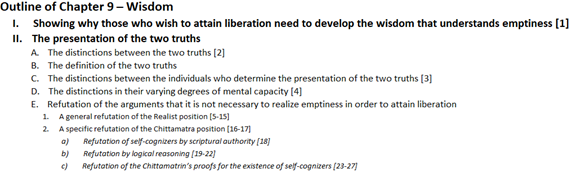
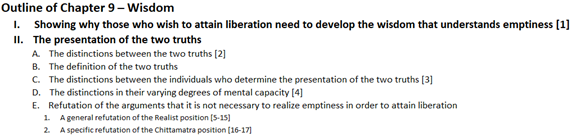
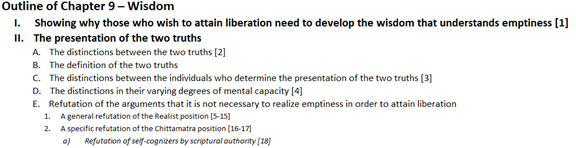
Modern Bodhisattva’s Way of Life: Why we Cry at Movies when we Know it is Not Real

(9.30) (Chittamatrin) “How does realizing that all phenomena are like illusions
Eliminate delusions?
After all, a magician who creates an illusion of a woman
Can still develop attachment for that illusory woman.”

The Prasangikas say that realizing all phenomena are illusory functions to eliminate our delusions which bind us in samsara. Here the Chittamatrins are asking how does that work? Just realizing something is an illusion does not eliminate the delusions that arise in our mind. The Chittamatrins use the example of an illusory woman created by a magician. They say that even though the magician knows the woman is an illusion he still develops attachment with respect to the appearance. Therefore, simply knowing that something is an illusion does not actually function to eliminate the delusions of attachment and so forth. A more modern example would be computer generated porn.  Everyone knows that such images are generated by a computer and there is not actually a woman there, but nonetheless people generate attachment for it, including likely the people who make it. A modern day Chittamatrin would say if we generate attachment for these things that we know are not real, then knowing that all phenomena are illusions will not eliminate our attachment.  

(9.31) This is because the magician has not abandoned
The deluded tendency to grasp at true existence.
Thus, when he beholds the illusory woman,
His tendency to perceive her emptiness is very weak.

We are like a child that keeps being fooled by the same magician’s trick again and again.    The illusion is of something that looks like a non-illusion – it is an illusion that appears real.  We then relate to this illusion as if it were real, and create contaminated karma, which ripens in the future in more similar illusions.  We are then told that it is just an illusion, but we get fooled again, like a child with a magic trick.  This happens because we have many tendencies of being gullible with respect to samsara.

The reason for this is not difficult to understand. There are two types of delusion, intellectually formed delusions and innate delusions. Having knowledge that things are illusions or computer generated might reduce our attachment somewhat because it counters the intellectually formed delusion. But simply the intellectual knowledge that it is an illusory woman or a computer generated image does not counter our innate delusions. For example, when people watch scary movies they have emotional reactions even though they know that it is just a movie. Why does this happen? Because while their conscious mind knows that it is just a movie, their subconscious mind (their innate delusions essentially) still believe that the images are real and part of their mind reacts as if they are.

To overcome this, we need to realize emptiness with increasingly subtle levels of our mind. Our innate delusions are located deeper within our subconscious and they can only be countered by placing the Dharma underneath the level of our delusion. Ultimately, we need to realize emptiness with our very subtle mind which is underneath all of our subtle minds. By realizing emptiness with our very subtle mind, we can uproot all of our innate delusions and then such appearances will no longer generate delusions in us because we realize at a deeper level that they are not real.  

Through reminding ourselves of emptiness again and again, we can gradually come to see the trick, and then we are no longer fooled by it.  If we think what appears to our mind is real, we can get sucked into it and we can quickly become schizophrenic – believing hallucinations are real.  If we remind ourselves that it is just appearances projected by our mind, but that none of them are real, then even those these things will appear, we won’t worry about it and won’t react to the appearances as if they were real.  Through training consistently with this, eventually we cut the power of the appearances over us.

Happy Tsog Day: Prostrating to the Spiritual Guide’s Pervasive Nature

In order to remember and mark our tsog days, holy days on the Kadampa calendar, I am sharing my understanding of the practice of Offering to the Spiritual Guide with tsog.  This is part 7 of a 44-part series.

Prostrating to the spiritual guide as the Truth Body

Abandonment of all faults together with their imprints,
Precious treasury of countless good qualities,
And sole gateway to all benefit and happiness,
O Venerable spiritual guide I prostrate at your lotus feet.

Our spiritual guide’s Truth Body is the ultimate nature of all phenomena. All things are equally empty. From the point of view of their lacking inherent existence, all emptinesses are the same nature. There is no object that is any more or less empty than all the others. Our spiritual guide imputes their I onto the emptiness of all things, which is why we can correctly say that he is the ultimate nature of everything. Everything that we see or perceive, including whatever device we are reading this post on, is ultimately our spiritual guide. With this understanding, when we look at any object, we can see our spiritual guide looking back at us. What appears is a form, but this form is by nature emptiness – it is the emptiness of our spiritual guide appearing as form. With this verse, we prostrate to our spiritual guide as the Truth Body of all the Buddhas. With the first line, we prostrate to both the cause and function of the Truth Body. The way we attain enlightenment is by meditating on the emptiness of our very subtle mind. This concentration functions to purify our very subtle mind of all contaminated karmic imprints. When our mind is free from them all, it naturally transforms into the omniscient clear light mind of a Buddha. The second line explains that all good qualities emerge from the Truth Body, just as all waves arise from an ocean. The third line indicates that the realization of the Truth Body is the gateway to all happiness for ourself and all living beings. By realizing it, both ourself and all living beings can enjoy eternal joy. And the last line reminds us that even though the Truth Body is very subtle and does not assume any particular form, we should remember it is our spiritual guide. Sometimes we can think of emptiness as a “state” and forget that the Truth Body is a person.

Prostrating to the spiritual guides as the synthesis of all Three Jewels

Essence of all Guru-Buddhas and Deities,

Source of all eighty-four thousand classes of holy Dharma,

Foremost amongst the entire Superior Assembly,

O Kind spiritual guides I prostrate at your lotus feet.

There are two ways we can understand that our spiritual guide is the synthesis of all three jewels. The first is to understand that he is the source of all three jewels, they are all his emanations. He emanates all Buddhas, all Dharma teachings, and all Sangha, like limbs of his body. The second way is to understand that our spiritual guide is an “I” imputed upon all the Buddhas, all the Dharmas, and all the Sanghas. Geshe-la has said on numerous occasions that “I am the NKT.” His meaning is that he imputes his “I” onto all the Buddhas in the NKT, all the Dharma in the NKT, and all the Sangha of the NKT. When we look at any of these, it is our spiritual guide. Practically, this means our bodies are Geshe-la’s bodies in this world, our speech is Geshe-la’s speech in this world, and our Dharma realizations are his wisdom in this world. Where does his body, speech, and mind come from? Lama Tsongkhapa’s. In exactly the same way, in the first line of this verse, we recognize that our spiritual guide is all the Buddhas and deities. The second and third lines reveals he is the source of all Dharmas and all Sangha. Recognizing our spiritual guide in this way, we prostrate to him.

Prostrating to the lineage Gurus and Three Jewels

To the Gurus who abide in the three times and the ten directions,
The Three Supreme Jewels, and all other objects of prostration,
I prostrate with faith and respect, a melodious chorus of praise,
And emanated bodies as numerous as atoms in the world.

Our spiritual guide, who we have been prostrating to, did not emerge out of nowhere, but arose out of an unbroken lineage of realized masters all the way back to Buddha Shakyamuni. To be a lineage Guru means to have attained all the realizations that are taught within that lineage – to have personal experience of the truth of the instructions. Within the Kadampa Lineage, the principal lineage Gurus are Buddha Shakyamuni, Atisha, Je Tsongkhapa, Je Phabongkapa, Trijang Rinpoche, and our own Geshe Kelsang Gyatso. Each lineage Guru taught the Dharma and had Sangha followers. Towards this great ocean of three jewels moving through the three times, we prostrate. This verse also indicates that when we engage in this practice of prostration, we should imagine that every one of our hair pores emanates bodies, and each one of those bodies emanates countless more, filling the entire universe. All these countless bodies prostrate.

Happy Tara Day: Causing the three worlds to shake

This is the fifth installment of the 12-part series sharing my understanding of the practice Liberation from Sorrow.

Praising Tara by the light that radiates from the letter HUM

Homage to you who strike the ground with the palm of your hand
And stamp it with your foot.
With a wrathful glance and letter HUM,
You subdue all seven levels.

This also refers to Tara’s ability to engage in wrathful actions and can be understood from the above.  I’m not sure what the seven levels are.

Praising Tara by her Dharmakaya aspect

Homage to you who are happy, virtuous and peaceful,
Within the sphere of the peace of nirvana.
Fully endowed with SÖHA and OM,
You completely destroy heavy evil actions.

This verse refers to definitive Tara.  The conventional Tara is the green deity we know and love.  She manifests this form so that living beings can more easily develop a relationship with her.  But actual Tara is Dhamakaya Tara, or Truth Body Tara.  This is definitive Tara.  The Dharmakaya is a Tara’s realization of great bliss mixed inseparably from the emptiness of all phenomena.  She is referred to as the mother of all Buddhas because all Buddhas arise out of her Dharmakaya – she gives birth to them from her realization of bliss and emptiness.  What does the Dharmakaya feel like?  Happy, virtuous, and peaceful.  This is her inner pure land, and anytime we ourselves feel happy, virtuous, or peaceful, we are experiencing a similitude of her pure land.

Praising Tara by her divine actions of peaceful and wrathful mantras

Homage to you who completely subdue the obstructions
Of those who delight in the Dharma Wheel;
Rescuing with the array of the ten-letter mantra
And the knowledge-letter HUM.

Peaceful actions refer to a Buddha’s ability to pacify negativity, delusions, or their imprints in either ourselves or in others.  All living beings possess Buddha nature.  What does this mean?  It means we all possess within ourselves the potential for an enlightened mind, and all we need to do is purify our mind of all that defiles it and our natural enlightened state will be unleashed or uncovered.  What is our mind defiled by?  Principally three things:  negative karma, delusions, and their imprints.  Technically negative karma is also an imprint of a delusion which is why we normally say the “two obstructions,” referring to delusions and their imprints.  But from a practical point of view, we place particular emphasis in the early stages of our practice on purifying our negative karma (lower scope meditations), then overcoming our delusions (intermediate scope meditations), and finally the remainder of our contaminated karma (great scope meditations).  Tara can help us pacify all three of these, as explained by her ten-letter mantra whose principal function is to bestow all of the Lamrim meditations.  According to Tantra, the two main objects to be pacified are ordinary appearances and ordinary conceptions.  Ordinary appearances are phenomena appearing to exist independently of our mind (the things we normally see), and ordinary conceptions are grasping at the wrong belief that objects do in fact exist in the way that they appear.  For example, when we think of ourself, we see our ordinary body and mind.  This is an ordinary appearance.  When we grasp at them actually being ourselves, this is an ordinary conception.  Tara also has the power to pacify all our ordinary appearances and conceptions.

Praising Tara by her divine actions of wrathfully shaking the three worlds

Homage to TURE, stamping your feet,
Born from the seed in the aspect of HUM,
Who cause Mount Meru, Mandhara and Vindhya,
And all the three worlds to shake.

Buddhist cosmology is incredibly vast.  The universe as we know it actually only one world system.  There are the thousand worlds, which is a thousand world systems or universes as we know them.  There are the two thousand worlds, which is a thousand of the thousand worlds, or one million universes.  And there are the three thousand worlds, which is a thousand of the two thousand worlds, or one trillion universes.  In truth, there are countless universes, and the three thousand worlds is a shorthand for implying countless that makes it somewhat easier to grasp.  Just as the stars in the sky form galaxies, super clusters, and so forth, the three thousand worlds also cluster together and are arranged in different ways, so too the three thousand worlds cluster together and are arranged in particular way.  In the center of the three thousand worlds is Mount Meru, which is actually comprised of countless different pure lands at different levels of purity, such as the Land of 33 Heavens where Buddha went to teach his mother after she took rebirth there.  At the top of Mount Meru is Heruka’s celestial mansion.  Surrounding Mount Meru are the four major and eight minor continents, like an archipelago of different clusters of universes – they can be likened to superclusters of galaxies.  The universe that we live in is simply one of many universes in what is known as the Eastern continent, but is in reality just a cluster of universes.  Traditional cosmology as we know it just talks of our one universe where the Big Bang unfolded, but this one universe is as insignificant as our own planet is in our universe.  The vastness of Buddhist cosmology is almost beyond comprehension.  Interestingly, some astrophysicists have a similar view arguing we live in a multiverse, or a n-dimensional multiverse, but they have no idea how these universes are shaped.  Just as the science of quantum physics is gradually catching up with Buddha’s teachings on emptiness, it is only a question of time before science catches up with Buddha’s teachings on cosmology.  Tara’s blessings and power pervade everywhere.  Vajrayogini and Tara are actually the same being, just appearing at two different levels – Action Tantra version as Green Tara and Highest Yoga Tantra version of Red Vajrayogini.  Vajrayogini is in union with Heruka inside his celestial mansion atop Mount Meru and her wisdom is able to cause all three thousand worlds to shake!

Praising Tara by her divine actions of dispelling internal and external poisons

Homage to you who hold in your hand
A moon, the lake of the gods;
Saying TARA twice and the letter PHAT,
You completely dispel all poisons.

Conventionally, Tara’s blessings are particularly powerful at dispelling external poisons, such as those we might ingest.  I personally suffer from terrible allergies, some of which are deadly.  When I have a strong allergic reaction to something I eat, I of course take my Benadryl or other allergy medications, but I also recite with great faith Tara’s mantra requesting that she protect me.  Those who have allergies can do the same, even allergies as light as hay fever.  But principally, Tara’s blessing dispel the inner poisons of our delusions.  Outer poisons can at most harm us in this one life, but the inner poisons of our delusions harm us in all our future lives.  Considering our delusions to be inner poisons is a particularly powerful way of thinking of them.  If we ingested an external poison, we would do everything we can as quickly as we could get rid of it from our body or to take an antidote.  But we would never think that the poison is us, we see clearly the difference between the poison and ourselves.  In the same way, our delusions are not us, but they do terrible harm to us, and we should feel great urgency to purge them from our system.  Tara is the antidote to all of the inner poisons of delusions.  She is known as the Lamrim Buddha because she helps Atisha’s followers and her blessings specifically function to bestow Lamrim realizations.  Lamrim is like a net of virtuous minds that functions to oppose all delusions directly or indirectly.  By weaving the Lamrim within our mind, we protect ourselves against any possible combination of delusions, and thus achieve protection from all inner poisons.  

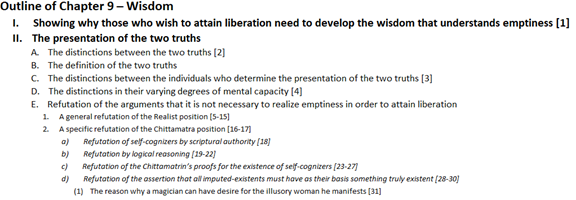
Modern Bodhisattva’s Way of Life: There is Nothing There Behind the Label

(9.27cd) (Chittamatrin) “Samsara, like all imputed objects, must have something substantial as its basis;
Otherwise, it would be completely empty, just like space.”

Here, the Chittamatrins make the argument that all of us tend to think before we start studying the Dharma. When we hear Buddhists say everything is empty, we take it to mean that nothing exists at all. If there is not something there that the object refers to or there isn’t an object there, then nothing exists at all and we fall into the extreme of nihilism or nothingness. Therefore, the Chittmatrins say there must be something substantial as the basis of samsara otherwise it doesn’t exist at all. Once again it is very important for us to identify how we ourselves hold onto the doubts and objections raised by the other philosophical schools. It is only when we identify these views within our own mind that the Prasangika refutation functions to dismantle our own ignorance.

(9.28) If imputed phenomena, such as samsara, had truly existent bases,
How could you ever become bound in samsara and how could you ever escape from it?
According to you, mind cannot be an apprehender related to something it apprehends;
Rather, it must be an isolated cognition of itself.

(9.29) If the mind exists inherently, or independently,
Then it is already free from all defilements,
And it follows that all living beings are already enlightened!
So what is the point of teaching that everything is just the nature of mind?

All of this is quite technical, so I will try to simplify it to the main points.

All schools, below Madhyamika-Prasangika would say there is a basis in which the object can be found to exist.  The different schools say they can find it in different parts of the basis.  Some say it is in the body, some say it is in the mind, some say it is in the consciousness, and some say it is in a part of the consciousness called the ‘conciousness basis of all.’  But all of these views are the same in that they think there is something actually there from its own side that is something more than mere karmic appearance of mind.  They argue there must be something, otherwise there is nothing, which is not possible.

Only the Prasangikas say there is nothing there in the basis where the object can be found.  They make a distinction between the basis of imputation and the imputation itself.  The lower schools say the object is one with its basis (this would be an inherently existent thing), the Prasangikas make a distinction between the two.  The extreme of non-existence says if things do not exist inherently, they do not exist at all.  The Prasangikas say things exist as mere imputation that function.  A Mexican salad does not exist from its own side, but it still functions to give us a good lunch.  A car does not exist from its own side, but it still functions to take us around town.  If you search for something more than the appearance of a microphone, you will find nothing.  But the appearance still accomplishes an illusion-like function in this illusory world.  Ordinary appearance is it ‘looks like something is there, outside of the mind.’  But for the Prasangikas, other than the appearance of the microphone, there is no microphone.  We then use this appearance to remind us that there is in fact nothing there.  The more it appears, the more it reminds us, and so our understanding deepens. 

In fact, the Prasangikas turn the debate by saying if samsara did exist from its own side, how could you ever become enmeshed in it, and if you were within it, how could you ever escape from it?  It is only by embracing the Prasangika view that liberation becomes possible.

All this discussion of self-cognizers is important for the following reason.  Something can only be established to exist if it is known by mind.  All the schools agree with this.  So the question the Prasangikas pose to the Chittamatrins is ‘what knows mind, how do you establish the mind itself.’  The Chittmatrins say there is part of the mind which knows itself – a self-cognizer, and it is this that exists from its own side.  The Prasangikas say a mind cannot know itself for the same reason a blade cannot cut itself.    

This is not an academic debate, but has very important implications for our Mahamudra meditations where we take as the main object of our meditation the mind itself.  If the mind cannot know itself, how can we meditate on our mind itself?  For our Mahamudra meditations to be successful, we need to find the right object, so getting this right is very important.

Modern Bodhisattva’s Way of Life: Distinguishing the Imputation from its Basis

(9.23cd) When we remember the object experienced, we remember the consciousness related to it,
Just as we would recall being poisoned by an animal bite when we experienced the pain that subsequently occurred.

Prasangikas do not deny that the mind can know its basis of imputation, they simply deny that the mind can know itself. This is a central tenant of the Prasangikas – they make a distinction between the basis of imputation and the imputation itself. For example, the basis of imputation of a forest is many trees. The forest is the object itself, and the basis is the trees. In the same way, the basis of imputation of a mind is the aggregates of consciousness, discrimination, feeling, and compositional factors.  The Prasangikas say the mind can know its basis, it simply cannot know itself.  The mind can know a consciousness associated with the mind, it just can’t see itself, the mere imputation mind. Therefore, the ability to remember our previous moments of consciousness does not establish the existence of self-cognizers – namely a mind that knows itself – rather it merely establishes that the mind can know its basis of imputation, which includes consciousness. The Prasangikas have no problem with that. When we remember a previous mind, we are remembering a previous awareness of its basis of imputation, in this case consciousness.   

(9.24ab) (Chittamatrin) “If people who have attained states such as tranquil abiding can see the minds of others far away,
Surely one can see one’s own mind, which is very close.”

Both the Chittamatrins and the Prasangikas agree that when we attain tranquil abiding we gain certain clairvoyance that enable us to see the minds of other living beings far away. Here, the Chittamatrins assert if when we attained tranquil abiding we can know others’ minds, then certainly we can know our own mind. This shows that it is perfectly possible for a mind to know a mind.

(9.24cd) People who apply magical eye lotion can see treasure vases deep beneath the ground,
But they cannot see the lotion!

(9.25) We have no intention of refuting the existence of
Eye awareness, ear awareness, or any other awareness.
What needs to be abandoned is the awareness that grasps at truly existent forms and so forth,
Which is the fundamental cause of all suffering.

The Prasangikas first point out that distance or proximity has nothing to do with knowing. Just because our mind is close and others’ minds are farther away does not mean we should have any greater ability to see one or the other. Additionally, the Prasangikas agree that we can have awarenesses, including being aware of others’ minds. We just cannot know directly our own mind. The object to be abandoned by the Prasangikas is truly existent forms, namely forms that exist in the way that they appear, independent of the mind. The Chittamatrins say that all forms do exist truly because they are aspects of the mind and the mind itself exists truly. Therefore, they say all forms truly exist. The Prasangikas argue that the mind does not truly exist, but agree that forms are aspects of the mind. The primary part of the Chittamatrin view refuted by the Prasangikas is the truly existent mind.

(9.26ab) (Chittamatrin) “Illusion-like forms are not other than the mind,
But neither can they be considered to be one with the mind.”

Here, the Chittamatrins agree that forms are illusion-like, but they have a different understanding of the term. The object to be abandoned for Chittamatrins is the existence of external objects. An external object is an object that exists outside of the mind. Therefore, for the Chittamatrins, they agree that illusion-like forms are the root of samsara and argue that their view also refutes the existence of such illusion-like forms and therefore holders of Chittamatrin views can escape from samsara. Just as the Prasangikas make a distinction between the basis of imputation and the imputation itself, the Chittamatrins make a distinction between illusion-like forms and the mind itself. Objects are aspects of the mind, but their appearing to exist externally from the mind is the root of samsara because in fact they do not exist in that way. Therefore, they say that illusion-like forms are not other than mind, meaning they are still aspects of and by nature the mind. But they are nonetheless different from the mind in the sense that they are illusions. In this sense, they cannot be considered the same thing as the mind. This enables the Chittamatrins to agree that grasping at illusion-like forms is the root of samsara while still positing that the mind itself exists inherently.

If they are true, why say they are not other than the mind?
And if they are not other than the mind, why say they are true?

(9.27ab) Just as illusion-like forms lack any true existence,
So it is with the mind that beholds them.

Here the Prasangikas say that just as forms lack true existence, the same is true for the mind that knows them. It is perfectly possible for a non-truly existent mind to know a non-truly existent form. But how is it possible for a truly existent mind to know a non-truly existent form? How can something true come into contact with something not true?  If they can’t come into contact with each other, then how can any object be established?

Happy Protector Day: Preliminary practice of the Guru Yoga of Je Tsongkhapa

The 29th of every month is Protector Day.  This is part 4 of a 12-part series aimed at helping us remember our Dharma Protector Dorje Shugden and increase our faith in him on these special days.

Within the Kadampa tradition we are advised to practice the sadhana Heart Jewel as our daily practice as explained in the book by the same title.  If we are a Tantric practitioner, we engage in the Tantric version of this practice known as Hundreds of Deities of the Joyful Land According to Highest Yoga Tantra as explained in the Oral Instructions of Mahamudra.   In either case, the sadhana begins with the Guru Yoga of Je Tsongkhapa.  I will explain things from the perspective of Heart Jewel since it is a common practice. 

In general, the practice of Heart Jewel is the method for practicing the entire path to enlightenment.  There are three main parts – affectionately called a ‘Heart Jewel Sandwich.’  The first part is the Je Tsongkhapa part – the function of this part of the practice is to be able to draw closer to Je Tsongkhapa, the founder and source of the Dharma of the New Kadampa Tradition.  Through reling upon him, we receive his external and internal guidance to be able to realize his Dharma of Lamrim, Lojong and Vajrayana Mahamudra.  The second part is our Meditation on Lamrim, Lojong and Vajrayana Mahamudra.  We do this in the middle of the practice.  And the final part is the Dorje Shugden part – this creates the causes to be able to receive Dorje Shugden’s care and protection for being able to gain the realization of Lamrim, Lojong and Vajrayana Mahamudra.  This series of posts is primarily about how to rely upon Dorje Shugden, but I will nonetheless give a brief explanation of how to engage in the first two parts of the Heart Jewel sandwich. 

To actually engage in the Je Tsongkhapa part, we do as follows.  First, we generate the mind of refuge and bodhichitta – here we establish our motivation for engaging in the practice:  “With the wish to become a Buddha so I can help all the beings around me attain the same state, I will now engage sincerely in the practice of Heart Jewel, trying to generate the minds indicated by the words.”  Then, we engage in the prayer of the seven limbs and the mandala.  This accomplishes two main functions:  First, we accumulate merit – merit is positive spiritual energy.  It is like gasoline in our spiritual car.  Second, we purify negativities – negative karma prevents us from engaging in spiritual practices and is the substantial cause of all our suffering.  It is like lots of traffic and debris on the roads.  On this basis, we then recite the Migtsema prayer and prayer of the stages of the path.  These two enable us to receive the blessings of all the Buddhas through our living spiritual guide Je Tsongkhapa.  Blessings are like spark plugs which ignite the gas of our merit to push us along the road to enlightenment.  The migtsema prayer draws us closer to Je Tsongkhapa and enables us to receive the blessings of the wisdom, compassion and spiritual power of all the Buddhas.  The prayer of the stages of the path is a special prayer for requesting the realizations of the Lamrim.

At this point in the sadhana we typically engage in meditation on Lamrim.  Usually people use the book the New Meditation Handbook and cycle through the 21 Lamrim meditations explained there, one each day.  Alternatively, we can practice the 15-day cycle explained in Mirror of Dharma.  Instead of engaging in a daily Lamrim meditation, it is also possible for us to recite with deep faith one of the longer prayers of the stages of the path.  There are three main Lamrim prayers – the short prayer as explained in Heart Jewel, the middling prayer as explained in Oral Instructions of Mahamudra, or the extensive prayer as explained in Great Treasury of Merit.  When we recite the Lamrim prayers as our main Lamrim practice, we should do so slowly and from memory, trying to sincerely generate in our heart and without distraction the Lamrim minds indicated by the words.  For more information, we can also attend classes on the Lamrim at our local Dharma centers, including Foundation Program on the book Joyful Path of Good Fortune, which is our principal Lamrim text.  After our meditation, we recite the dedication prayer from the Je Tsongkhapa part of Heart Jewel.

For more detailed information, we can read in the book Heart Jewel which provides an extensive commentary.  Geshe-la has said that this is his most important book, yet sadly it is often overlooked.  It is available for sale at www.tharpa.com

We should also take advantage of the opportunity to attend courses on Heart Jewel at our local Kadampa center, and we should make many requests that our local teacher grant the empowerments of Je Tsongkhapa and Dorje Shugden.  What is an empowerment?  An empowerment in general is method for establishing a very close connection with a particular enlightened being.  The closer our karma with a given enlightened being, the more ‘bandwidth’ they have for being able to help us.  It is a bit like making a connection with a very special friend.  When we meet somebody very powerful and we have a close connection with them, we can more easily call upon them and ask them for help.

An empowerment is like receiving a personal deity within our mental continuum.  We can all appreciate the qualities of the different Buddhas, and think how wonderful it would be to know them and be able to call upon them.  But how much more wonderful would it be to have a personal emanation of a Buddha who is available for us 24 hours a day, 7 days a week.  During the empowerment, we receive our own personal emanation of Dorje Shugden into our mental continuum.  We will be able to develop a personal relationship with this Dorje Shugden and he will care for us.  Geshe-la once told a very senior teacher about the Dorje Shugden empowerment, “people need this empowerment, they need this protection.”

Happy Tsog Day: Prostrating to the Spiritual Guide’s Form Bodies

In order to remember and mark our tsog days, holy days on the Kadampa calendar, I am sharing my understanding of the practice of Offering to the Spiritual Guide with tsog.  This is part 6 of a 44-part series.

Prostrating to the Spiritual Guide as the Enjoyment Body

Spiritual guide with a jewel-like form,
Who out of compassion bestow in an instant
Even the supreme state of the three bodies, the sphere of great bliss,
O Vajra Holder I prostrate at your lotus feet.

Prostration is wishing faith in action. There are three types of faith: believing faith, admiring faith, and wishing faith. Believing faith believes the good qualities of holy objects and arises in dependence upon contemplation of valid reasons or personal experience. It differs from blind faith in that it has valid reasons supporting the correct beliefs. Admiring faith generates a sense of wonder and amazement at the good qualities we believe in. Wishing faith wishes to acquire those good qualities ourselves. We cannot develop wishing faith without admiring faith, and we cannot develop admiring faith without believing faith. In dependence upon wishing faith, we develop an aspiration, and this in turn moves us to action towards the accomplishment of our aspiration. When we prostrate towards the holy beings, we have two key recognitions in mind. First is wishing faith, as just described. Second is humility, understanding we currently lack the good qualities we are prostrating towards. We humbly wish to gain the good qualities we are prostrating towards.

The act of prostration itself is karmically very similar to rejoicing. Geshe-la explains in Joyful Path that when we rejoice in somebody’s good qualities or actions, it creates the causes for us to obtain those same good qualities. The effect similar to the cause of prostrating is to gain the good qualities we are prostrating towards. The tendency similar to the cause is to always have faith in that which we are prostrating towards. The environmental effect is to always have the holy object we are prostrating towards continue to appear in all our future lives. The ripened effect is to be reborn ourself as a holy being possessing the good qualities we are prostrating towards.

We can prostrate with our body, speech, and/or mind. In the context of Offering to the Spiritual Guide, we prostrate with our body by placing our palms together at our heart as we recite these verses of the sadhana. We prostrate with our speech by chanting the verses of the sadhana, either verbally or internally. We prostrate mentally by generating the mind of prostration described above.

It is important to note that all these verses are prostrations to our spiritual guide. Normally we grasp at Buddhas as somehow being separate from our spiritual guide, like they are different beings. According to the Lamrim teachings, the sign we have gained the realization of reliance upon the spiritual guide is when we think of Buddha, we think it is our spiritual guide; and when we think of our spiritual guide, we think Buddha. Viewing deities, such as Lama Losang Tubwang Dorjechang, as an emanation of our spiritual guide is called “Guru yoga.” Guru yoga is the actual quick path to enlightenment. There are two reasons for this. First, of all the Buddhas, the one we are karmically closest to is our spiritual guide. This makes their blessings in our mind more powerful than blessings from a Buddha who is karmically more distant. Second, our spiritual guide is like a portal to all the Buddhas. When we make a prostration to our spiritual guide, it is as if we are making a prostration to all the Buddhas, when we request blessings from our spiritual guide, it is as if we are requesting blessings from all the Buddhas. In this way, our spiritual guide acts as a merit multiplier, making any action towards our spiritual guide karmically equivalent to engaging in the same action countless times – one towards each of the countless Buddhas.

This explanation on what is prostration and how to prostrate is equally applicable to all the prostration verses that follow. In them, we prostrate to the principal good qualities of our spiritual guide and thus, create the karmic causes to become just like him.

In this verse, we prostrate to the spiritual guide as the Enjoyment Body. The Enjoyment Body is generally understood as the Buddha’s actual vajra body. This is because its nature is our very subtle indestructible wind that remains with us in life after life. It is principally our Enjoyment Body that sends out Emanation Bodies which in turn pervade the whole world. The Enjoyment Body is the source of these emanations. The first line reveals how our spiritual guide’s Enjoyment Body is like a diamond that has many facets. Each facet is like a different Emanation Body (Heruka, Tara, Dorje Shugden, etc.), but they are all by nature the diamond of our spiritual guide. The second line indicates how the Enjoyment Body sends out emanations. When the sun of a Buddha’s compassion meets the rain of our faithful mind, a rainbow-like Emanation Body spontaneously appears “in an instant.” The third line explains how a Buddha’s three bodies (Emanation Body, Enjoyment Body, and Truth Body) are all by nature great bliss of our indestructible wind. In this light, we can understand that a Buddha’s body is bliss. The last line refers to him as the Vajra Holder. Vajra refers to great bliss, so this line indicates he is never separate from great bliss. Recognizing all this with wishing faith, we prostrate.

Prostrating to the spiritual guide as the Emanation Body

Exalted wisdom of all the infinite Conquerors
Out of supremely skilful means appearing to suit disciples,
Now assuming the form of a saffron-robed monk,
O Holy Refuge and Protector I prostrate at your lotus feet.

Here, we are prostrating to our spiritual guide’s principal Emanation Body. In truth, a Buddha’s emanations pervade the whole world, and we can correctly say there is not a single thing that is not an emanation of a Buddha. But Buddhas typically also have a principal Emanation Body with a distinct visual form – in this case, our spiritual guide. The first line reveals that the omniscient wisdom of all the Buddhas takes the form of our spiritual guide’s Emanation Body. What appears is a monk, but by nature we recognize this form as a manifestation of the exalted wisdom of all the Buddhas. The second line explains the uncommon characteristic of our spiritual guide’s Emanation Body – namely, it can appear directly to us. Other Emanation Bodies, such as Manjushri, Avalokiteshvara, Vajrapani, and so forth, are still too pure for us to be able to perceive them with our ordinary samsaric eyes. But our spiritual guide is able to appear directly to us in a form we can see, hear, and so forth. Geshe-la explains in Great Treasury of Merit that despite the spiritual guide being the synthesis of all the Buddhas, he is nonetheless able to appear directly to our ordinary mind – this is his greatest miracle power.

The third line explains the form our spiritual guide takes, namely that of an ordained person. We may think this is a contradiction because elsewhere Geshe-la explains that our spiritual guide can be lay or ordained. There are several different types of ordination – pratimoksha, bodhisattva, and tantric. The essential meaning of the pratimoksha ordination is the vow to not harm living beings, the essential meaning of the bodhisattva ordination is to put others first, and the essential meaning of the tantric ordination is to maintain pure view. A lay spiritual guide can equally keep all these vows, and ultimately the bodhisattva and tantric vows subsume the pratimoksha vows. Regardless, in the context of this sadhana, we are viewing our spiritual guide as Je Tsongkhapa in recognition of him as founder of the New Kadampa Tradition. The last line reminds us of the function of our spiritual guide, namely to serve as both our refuge and protector. We recognize we have a deluded mind, and we turn to him for assistance and protection.

Modern Bodhisattva’s Way of Life: Mind Cannot Know Itself

(9.19cd) (Chittamatrin) “When clear crystal turns blue, it does so in dependence upon something else;
But lapis lazuli is by nature blue – it does not depend upon anything else to appear blue.

(9.20ab) (Chittamatrin) “Similarly, some awarenesses are related to objects other than themselves,
Whereas others, such as self-cognizers, are not.”

The Chittamatrins agree that mind knows, but they say there are two different types of cognizer: cognizers that know other phenomena and cognizers that know themselves, or self cognizers. To illustrate the difference, they give the analogy of an object that reflects as blue and an object that is by nature blue.  According to the Chittamatrins, when the mind knows other phenomena, the mind itself is like the crystal that appears blue when it comes into contact with a blue object. The mind itself is crystal, and the crystal appearing is the mind appearing as the blue object. The Prasangikas agree with this.  Again, the Prasangikas agree objects are the nature of mind. Where they disagree is the nature of the mind itself.  Chittamatrins say that the mind truly exists, whereas the Prasangikas say it does not. To illustrate how an object that knows can know itself, the Chittamatrins use the example of lapis lazuli which is by nature blue. In the same way a self-cognizer is by nature knowing of itself.   

(9.20cd)The blueness of lapis lazuli does not exist without depending upon anything else –
It does not create its own nature!

It is incorrect to say that lapis lazuli is inherently blue. Its blueness itself arises from various causes and conditions. Blueness is not an inherent characteristic of lapis lazuli. But we can say that lapis lazuli is by nature blue.  This makes a clear distinction between the object – lapus lazuli – and its defining characteristic – its blueness.  In the same way, we cannot say that the ability of the mind to know is an inherent characteristic of the mind, because that would say the mind is knowing. But we can say that the defining characteristic of a mind is the ability to know since that is part of its valid basis.  

(9.21) (Chittamatrin) “Even though a lamp does not illuminate itself, it is the nature of illumination.”
Then you should say that mind does not know itself
But is the nature of conscious illumination.
However, you cannot say that it is known by a mind that is substantially different from itself.

Here the Prasangikas are making a difference between something that is by nature something and something that is inherently something.  To be inherently something means that the object is its defining characteristic. To be by nature something means to have a defining characteristic or the substance of the object is something. For something to be inherently existent means to exist independently of everything else. If something arises in dependence upon causes and conditions, then it necessarily does not exist inherently. The blueness of lapis lazuli arises from causes and conditions, therefore it does not exist inherently.

(9.22) According to you, if there is no truly existent awareness that knows mind,
Then mind does not exist;
In which case it makes no more sense to discuss whether the mind illuminates itself or not
Than it does to discuss the looks of the daughter of a childless person.

Remember both the Chittamatrins and the Prasangikas agree that for an object to exist it must be known by a valid mind.  If the Chittamatrins cannot establish a truly existent mind that knows itself then it cannot establish the existence of a mind, and then therefore there is nothing that could know anything or attain enlightenment. To talk about a mind that does not exist that knows something is like speaking of the child of a childless woman.  An object cannot be known by something that does not exist.

(9.23ab) (Chittamatrin) “If self-cognizers do not exist,
How do we remember subjective consciousness?”

What follows is some back and forth debate between the Chittamatrins and the Prasangikas about the existence of self-cognizers. The Chittamatrins put forward a variety of different proofs or reasons trying to establish the existence of self-cognizers. In this section, the Prasangikas refute the Chittamatrin proofs.

Since both the Chittamatrins and the Prasangikas agree that objects can only be established in dependence upon being known by a valid mind, how the mind knows itself is central to the debate about self-cognizers. The first argument that the Chittamatrins give to establish self-cognizers is the existence of memory of our previous minds. The Prasangikas say that a mind cannot know itself. The Chittamatrins assert that the mind exists truly, but to establish that they must have a mind that knows the mind. The Chittamatrins say that the Prasangikas are wrong that a mind cannot know itself because a mind can remember previous moments of mind. Therefore, mind can know itself. We will refute this argument in the next post.

Modern Bodhisattva’s Way of Life: Everything is the Nature of Mind

(9.16) Since for you Chittamatrins such illusion-like forms do not exist,

How do forms exist?

Instead of directly refuting the question posed by the Chittamatrins, the Prasangikas flip the tables and ask the question how then in their system do forms exist? Why do the Prasangikas do this? The Prasangikas are known as consequentialists. What this means is they will expose absurd consequences of the positions asserted by the other schools as a way of demonstrating that their tenets are not tenable.

(Chittamatrin) “Although forms do not exist as external objects, they do exist in another way –

A form is an aspect, the nature of the mind to which it appears.”

It is very important to get to know exactly how things exist in the Chittamatrin system. The final view of emptiness – the Tantra Prasangika view – is actually the union of the Prasangika and Chittamatrin view.  What is the Tantra Prasangkika view? The Prasangika part says that all phenomena are mere projections of mind, and the Chittamatrin part says that these appearances themselves are the nature of mind. More profoundly, the Chittamatrin part says that all phenomena are the nature of mind, specifically the mind of great bliss, and the Prasangika part says that the mind itself is empty of inherent existence.  Here, the Chittamatrins say that external objects do not exist but that forms are the nature of the mind to which it appears. The Tantra Prasangika view entirely agrees. External objects are objects that exist independent of the mind. Such objects do not exist in either the Chittamatrin view or the Prasangika view. But how do forms exist? They exist as aspects of the mind. They are like waves on the ocean. Just as you cannot separate a wave from the ocean, so too you cannot separate a wave-like form from the ocean of its mind.

(9.17) You Chittamatrins assert that mind itself appears in the aspect of form.

If this is so, how does the mind arise?

Buddha, the Protector of the World, has said

That the mind cannot behold itself.

(9.18ab) For example, just as the blade of a sword cannot cut itself,

So a mind cannot behold itself.

Where the Prasangikas and the Chittamatrins disagree is on the nature of the mind itself. The Chittamatrins say that the mind truly exists. The Prasangikas say that the mind is also empty. The Prasangikas do not disagree that phenomena are aspects of or are the nature of mind, they simply disagree about the ultimate nature of the mind itself.

The fundamental question the Prasangikas ask of the Chittamatrins is how does the mind arise or come into existence? Since the Chittamatrins say that the mind truly exists the question becomes how does it come into existence?  The answer the Chittamatrins give is the mind knows itself. How is this an answer? Both Prasangikas and the Chittamatrins agree that objects only exist if they are known by a valid mind. Therefore, they seek to establish the existence of the mind that has the ability to know itself – which is called a self-cognizer. The entire debate between the Chittamatrins and the Prasangikas revolves around the existence of self-cognizers.  If the Chittamatrins cannot establish a mind that knows the truly existent mind, then they would have to agree that a truly existent mind does not exist because there is no valid mind that knows it. The Prasangikas therefore refute the possibility of a mind that knows itself.

Their first refutation is scriptural authority in which Buddha says that a mind cannot know itself.  The analogy given in the scriptures is just as a blade cannot cut itself so too a mind cannot know itself.

(9.18cd) (Chittamatrin) “On the contrary, just as a lamp can illuminate both itself and the objects around it,

So the mind can behold both itself and other phenomena.”

The Chittamatrins argue as an analogy that just as a lamp can illuminate itself and all the phenomena around it, so too the mind can know itself and other phenomena. A light simply illuminates all things, including itself.  In the same way, the mind simply knows all things, including itself.  

(9.19ab) If a lamp illuminates itself, then darkness obscures itself,

And it follows that no one can see darkness because it is obscured!

Here the Prasangikas try to expose an absurd consequence that follows from believing the Chittamatrin position.  Since light and dark are relative concepts, opposite of one another, if it is true that a light illuminates itself then it follows that darkness obscures itself. Why is this true? Darkness is the absence of light, but if it is an existent it must still be something that is known. So if light knows itself then how does darkness know itself? Darkness is the nature of obscurity and so therefore it would follow that darkness obscures itself, at which point it could not be known. Therefore, there must be something that sees the light and sees the darkness that is separate from the light and the darkness itself. In the same way, to know a mind there must be something else that knows it.  It can’t know itself.

Further, it is incorrect to say that light illuminates itself. The light of a lamp may illuminate the lamp that holds the light, but the light itself does not illuminate itself it is simply the nature of luminescence. In the same way the mind does not know itself, it is simply the nature of knowing.