Happy Tsog Day: Transforming Adverse Conditions into the Path (part 1)

In order to remember and mark our tsog days, holy days on the Kadampa calendar, I am sharing my understanding of the practice of Offering to the Spiritual Guide with tsog.  This is part 32 of a 44-part series.

The third to the seventh points of training the mind

Though the world and its beings, filled with the effects of evil,
Pour down unwanted suffering like rain,
This is a chance to exhaust the effects of negative actions;
Seeing this, I seek your blessings to transform adverse conditions into the path.

Sometimes people do not like the teachings on the sufferings of samsara because they think it is a very pessimistic way of thinking. And we believe that being an optimist is how to be happy. The solution to this dilemma is to be pessimist with respect to expecting samsara to ever deliver happiness, but an optimist with respect to our pure potential to become an enlightened being. Usually we do the opposite. We expect samsara to work and are then frustrated and disappointed when it does not.  We likewise do not believe that we are capable of accomplishing any of the spiritual grounds and paths and therefore, we do not commit ourselves to training in them. We need to reverse this. The truth is samsara is the nature of suffering. Just as it is the nature of fire to burn, so too it is the nature of samsara to always go wrong. It is exceedingly rare that things go right, and when they do it does not last very long and never works out in the way we had hoped.

Why is this not a pessimistic way of thinking? It all comes down to managing our own expectations. We all know the logic of managing others’ expectations. If someone asks us how long it will take to complete a report, we think to ourselves it will probably take one week, but we tell the other person it will take two weeks. Why do we do this? Because if we told them it will take one week, and it takes one week, they will just simply accept it. But if we tell them it will take two weeks, and then we deliver it in one week, they will think we did an outstanding job. In both cases, the job itself was still done in only one week, the difference is what people’s expectations were determined how they experienced what happens. In exactly the same way, if we always expect things to go wrong, and it does, then we just accept it. But if it winds up being better than we expected, then we are pleasantly surprised. Either way, we are happy. Gen-la Losang said we should expect nothing from samsara – absolutely zero. If we do, then we will never be disappointed and will sometimes be pleasantly surprised. Thus, if we wish to be optimistic in terms of effect, in other words being happy with what happens in life, then we need to be pessimistic with respect to what we expect will happen.

There are two types of experience in samsara – pleasant experiences and unpleasant experiences. We can transform pleasant experiences into the path through the tantric teachings, as explained before during the tsog offering. And we can transform unpleasant experiences into the path through the Lojong teachings. In this way, no matter what we experience, it serves as fuel for our spiritual development, and therefore is not a problem.

What are some ways that we can transform adverse conditions into the path? Geshe-la explains in Universal Compassion that we can do so by means of method and by means of wisdom. By means of method means we use the adverse circumstance to increase our renunciation or bodhicitta. When something bad happens to us, we can view it as a reminder that if we wish to escape from suffering permanently, we must escape from samsara. When something bad happens to others, we can view it as a reminder that we must become a Buddha so that we can free all other living beings from samsara. Further, patiently accepting when bad things happen functions to purify the negative karma that is ripening. In this way we can gradually exhaust the effects of our negative actions. If we also refrain from engaging in new negative actions, it is just a question of time for our karma changes. To transform adverse conditions by means of wisdom means to recall that our self, the suffering, and whatever gave rise to suffering, are all equally empty of inherent existence. They are all mere karmic appearances to mind. Instead of grasping at some things as being good and other things as being bad, we can experience all things equally as the dance of bliss and emptiness.

On Creating Sangha:

Sometimes people can feel like they are isolated from sangha. For example, they may live far from a center or be physically incapable of making it very often – or even at all. Sometimes also, people might be able to go to the center all the time, but feel like they are not accepted or don’t fit in, even if everyone there loves and accepts them fully. This can be very painful for people, leading to a good deal of discouragement and despondency.

Many people leave the Dharma for this reason because we have a legitimate need for spiritual companionship and feel it is not being met, so we go looking elsewhere – searching, but perhaps never finding, leading to ever greater depths of despair. Even spiritual people don’t love us, we are truly worthless.

Knowing there are many people like this, we should make a concerted effort to reach out to those who seem to feel alone or isolated. Everybody welcome is not just a center policy, it is the very essence of the Kadampa way of life. We need to help make everybody feel welcome, accepted as they are without judgment, appreciated for their good qualities, and loved unconditionally.

But what should we do if we ourselves feel this way?

I would say this feeling comes from grasping at sangha existing from their own side in one form or another. We think Sangha are external to us somehow and we wait for them to “do something to us” or “for us.”

This can sometimes come across as harsh, like we are blaming people for their own loneliness or isolation. It can even take on a degree of judgment and callousness like it is your own dumb fault you feel that way, thus feeding the feeling like nobody cares. But this is not correct. Recognizing that our feelings of isolation are created by our own mind means by changing our mind, we can solve our problem. We don’t need others to do anything for us to no longer feel isolated from them. We cease being a victim of what they think and do towards us. We realize the solution lies within.

Whether somebody is a friend, enemy, or stranger depends upon the mind with which we engage with others. We can construct people in any number of ways by adopting different minds towards them. How we relate to others often quickly becomes a self-fulfilling prophecy, for good or for bad. When we assume somebody is our friend and we relate to them in that way, we tend to be friendly and open and then others respond to us in similar ways. When we assume everybody hates us an is judging us, we relate to them defensively and awkwardly, and they then find us strange or off-putting or somebody to be avoided. We don’t realize that how we view others, the mind with which we engage with them, very much shapes how they view and relate to us.

Sangha are those that inspire us along the path. They encourage us to practice Dharma. We may think, I don’t have anybody in my life like that. Everyone in my life is encouraging me to follow worldly paths and the so-called sangha in my life reject me or don’t make me feel welcome. So what should we do if we find ourselves in such a situation?

Practically, there are some clear things we can do. First, we can make an effort to go to our centers or festivals; or if that is not possible, to try at least stay connected with them on-line. Second, we can accept people as they are, not be disappointed in them that they are not loving and accepting us as much as we would want them to. Third, we can create the karma to have sangha friends by being a good sangha friend ourselves towards others.

More profoundly, we can realize sangha do not exist from their own side. Whether somebody functions for us as sangha depends upon how our mind relates to them. For example, if we see somebody being cruel or deceptive or lazy or whatever, we can view that person as showing us the example of how not to be. Their bad example is teaching us to not be like that and to instead be kind, trustworthy, and hard-working. Because we are relating to them that way, they are encouraging us to practice Dharma, even if that is not remotely their intention. Thus, for us, they are functioning as sangha. Perhaps they are even emanations appearing in this way to teach us these lessons, we don’t know. Actually, as soon as we view them as emanations, they become emanations for us because emanations do not exist from their own side. Nobody is an emanation from their own side, they become one for us through our mind of faith.

More profoundly still, we can cultivate a deep, personal, and very “real” relationship with our supreme sangha, the deities of Dorje Shugden’s vast assembled retinue and the deities of Heruka or Vajrayogini’s body mandala. Even if we never step foot in a Dharma center again, we can be with our supreme sangha every day for the rest of eternity. They are actual beings with minds, not just figments of our imagination who aren’t really there. The only difference between our external sangha friends and our internal sangha friends is whether they are form sources (objects that appear to our sense consciousnesses) or phenomena sources (objects that appear to our mental consciousness). But both are equally beings with whom we can – and should – develop deep, living relationships with.

Like anything else, sangha are created by mind. If we don’t create others as sangha, we will have no sangha in our life. Realizing this, we can let go of thinking we have no sangha in our life or let go of our real or perceived narratives of our sangha not accepting and loving us and start creating our own sangha – both externally and internally – by creating the causes for them to appear in our life. We can use the perceived absence of sangha in our life as a sign from Dorje Shugden encouraging us that now is the time to create such causes.

Then, no problems.

Modern Bodhisattva’s Way of Life: Slaying the Night King with our Dagger of Wisdom

(9.156) From time to time, they take a fortunate rebirth
And briefly enjoy some temporary happiness,
But soon they die and fall into the lower realms,
Where they experience unbearable suffering for a very long time.

(9.157) In samsara, there are many pitfalls that lead to suffering.
Instead of finding the path of emptiness that leads to freedom,
We are bound by its opposite, grasping at true existence.
But if, while in samsara, we do not find the path of emptiness,

(9.158ab) We shall continue to experience an unending ocean of suffering
That is so unbearable it is beyond analogy.

Because we do not have deep conviction in the existence of past and future lives, the teachings on the sufferings of the other realms seems abstract or intellectual or philosophical. But let us try set those doubts aside for now and engage in a thought experiment that past and future lives do actually exist and we are bound for them.

What awaits us in samsara? The truth is the vast majority of beings within samsara are in the lower realms. Put another way, the vast majority of our previous and future lives will also be in the lower realms. The reason for this is quite simple: when we take lower rebirth, we engage almost exclusively in negative actions which causes us to remain in the lower realms. Because there is virtually no Dharma to be found, it is very difficult for us to die with virtuous or pure minds and escape from the lower realms.

The sufferings of the animal realms are manifest in obvious. It is worthwhile spending some time watching nature shows about life in the wild to see what life is like for wild animals. It is definitely worth our time to watch the videos about how animals in industrial farming are treated see what their lives are really like.

To get a feel for the hungry ghost realms, we can consider the plight of those who are starving in various parts of the world. It’s not enough to just simply look at the pictures of the emaciated children, but we should spend time researching to try understand what their lives are like and ask ourselves what would we do if we were born in such a situation.

To get some feeling for the hell realms, we can watch authentic documentaries about war. Not the Hollywood glamorized versions of war, but the actual experience of soldiers and the horrors they go through. We can see how just a short period of time in a war zone can permanently scar someone’s mind and leave them crippled with PTSD for the rest of their life. One of the books that marked me the most was a book about how rape is used as an instrument of war. Imagine the terror of women who are captured by enemy soldiers and raped just to be cruel.

If we want to get a feel for what it is like to be born in the cold hells, we should spend the night like a homeless person in a cold city in the middle of winter.  If that is too much, then try to simply sleep a few nights without the heat on in the middle of winter without any blankets. We do not do these things sort of guilt or self-flagellation, but rather to help us move the teachings on the lower realms from something abstract and removed from us to getting a taste for what it is like. The goal is to generate a deep fear of taking rebirth there and a profound compassion for all those who have.

In truth, all of samsara is one giant reviving hell. In the reviving hells, we are killed by enemies and then revived just to be killed again.  Or worse, we are killed in battle and then revived only to begin killing again and continue the fight. One of the most powerful scenes from Game of Thrones is when there was a major battle had a village by the sea and thousands of the Night King’s soldiers were killed. As Jon Snow escaped with a few remaining wildlings, he looked back and the Night King merely raised his hands and all of those killed in the battle rose again as soldiers in his army only to fight another day. It did not matter whether the soldiers first fought on one side or the other, they all equally arose as soldiers in the army of the dead. Such an army is an unstoppable force that promised to devour all life in Westeros.

The night King, however, was able to be killed with Valyrian steel. Arya Stark wielded her Valyrian steel dagger and killed the Night King, causing all of the soldiers in the army of the dead to fall.  The wisdom realizing emptiness is the Valyrian steel that can destroy all delusions. The Night King of our samsara is our self-grasping ignorance. And if we kill this one demon with the wisdom realizing emptiness, we can cause all of samsara to cease.

Father’s Day for a Kadampa

As Kadampas, we often talk about the kindness of our mothers; but I think on Father’s Day it is equally important that we reflect on fathers.  Just as all living beings have been our mother, so too all living beings have been our father.  It is equally valid to view all living beings as our kind fathers.  Fathers, especially modern ones, often help us in many of the same ways as described in the meditations on the kindness of our mothers.  They could have insisted our mother had an abortion, but instead they chose to keep us.  They provided us with a roof over our head, food on our plate and clothes on our body.  They changed our diapers, taught us to walk, run and so forth.  As we grow older, fathers give us our sense of values, teach us about a solid work ethic, encourage us to push ourselves and reach for the stars.  By expecting so much of us, we rise to the occasion.  We each have different relationships with our fathers, so we should take the time to reflect on all of the different ways our father has helped us and generate a genuine feeling of gratitude.

Most of the time we take what our parents, especially our father, does for granted.  In fact, usually we feel no matter how much our father does for us, it is never enough.  We always expect more and then become upset that they didn’t provide it.  We feel it is our parent’s job to do everything for us, and when they don’t we become angry with them.  Actually, our parent’s job is to teach us how to do things for ourselves – and that necessarily means many instances of “helping us most by not helping us.”  Not helping us is sometimes the best way our parents can help us because it forces us to develop our own abilities and experience with life.  So instead of being angry at our fathers for what they didn’t do for us, we should be grateful for what they did do.  We should especially be grateful for what they didn’t do, because this is what helped us become independent, functioning adults.  We should look deep into our mind, identify the delusions and resentments we have towards our father, and make a concerted effort to remove them.  There is no greater Father’s Day gift we can provide than healing our mind of all delusions towards him.

There is no denying it, our fathers appear to have a great number of delusions.  Whether they actually have these delusions or are just Buddhas putting on a good show for us, there is no way to tell.  But the point is the same:  they conventionally appear to have delusions, and they tend to pass those delusions on to us.  Part of our job as a child is to identify the delusions of our father, then find those same delusions within ourselves, and then root them out fully and completely.  That way we don’t pass on these delusions down to future generations.  We should also encourage our own kids to identify our delusions and to remove them from their own mind.  We have trouble seeing our own delusions, but fortunately our kids can see them quite clearly!  In Confucian societies, they place a lot of emphasis on their relationship with their ancestors.  We need to recall the good qualities and values of our ancestors and pass those along; but we also need to identify their delusions and put an end to their lineage.  Doing this is actually an act of kindness towards our father because we limit the negative karma they accumulate (remember, the power of karma increases over time, largely due to these karmic aftershocks) by preventing the ripple effects of their negativity from going any further.

But I believe for a Kadampa, Father’s Day is about so much more than just remembering the kindness of our physical father.  I believe it is even more important to recall the kindness of our spiritual father, our Spiritual Guide.  My regular father gave birth to me as a person, but it is my spiritual father who gave birth to the person I want to become.  All the meaning I have in my life comes through the kindness of my spiritual father.  He has provided me with perfectly reliable teachings, empowerments into Highest Yoga Tantra practices, constant blessings, a worldwide spiritual family, and Dharma centers where I can learn and accumulate vast merit.  He believes in me and helps me believe in my own spiritual potential.  He has given me the wisdom to navigate through some of the hardest moments of my life, and he has promised to be with me, helping me, until the end of time.  There is no one kinder than my spiritual father.  I owe him everything.  Like my regular father, I have taken his kindness for granted.  I fail to appreciate what he has provided, and I was negligent when it came to praying for his long life – something I deeply regret, but not in a heavy guilt way.

My spiritual father also emanates himself in the form of Guru Sumati Buddha Heruka. He appears as Lama Tsongkhapa, who reveals the paths of Lamrim, Lojong and Vajrayana Mahamudra.  Lama Tsongkhapa resides at my heart and guides me through every day.  If only I can learn to surrender myself completely to him, he promises to work through me to ripen and liberate all those I love.  My spiritual father also emanates himself in the form of my Dharma protector, Dorje Shugden.  Dorje Shugden is my best friend.  Ever since the first day I started relying upon him, the conditions for my practice – both outer and inner – have gotten better and better.  This does not mean he has made my life comfortable, far from it!  He has pushed me to my limits, and sometimes beyond, but always in such a way that I am spiritually better off for having gone through the challenge.  Dorje Shugden’s wisdom blessings help me overcome my attachment, my anger and my ignorance.  I quite literally resolve 95% of my delusions simply by requesting Dorje Shugden arrange whatever is best for my spiritual development, and then trusting that he is doing so.  Geshe-la is my father.  Je Tsongkhapa is my father.  Dorje Shugden is my father.  My spiritual father also provides for me my Yidam.  A Yidam is the deity we try become ourselves, in my case Guru Father Heruka.  He provides me the ideal I strive to become like.

Father’s Day for me is also more than remembering the kindness of my spiritual father, but it is also appreciating the opportunity I have to be a father myself.  I have always been way too intellectual and have found it difficult to have heart-felt feelings.  Before I got married, I went to the Protector Gompa at Manjushri and asked for a sign whether I should get married or not.  I then had a very clear vision of a Buddha approach me and hand me a baby saying, “this is where you will find your heart.”  Being a father has taught me what it means to love another person, to be willing to do anything to help another person.  I use the love I feel for my children as my example of how I should feel towards everyone else.  Father’s Day is a celebration of that and an appreciation of the opportunity to be a father.  More often than not, fathers mistakenly believe Father’s Day is about their children showing (for once!) some appreciation for all that a father does, then when the gratitude doesn’t come they feel let down.  I think a Kadampa father should have exactly the opposite outlook.  Father’s Day is not about receiving gratitude, it is the day where we should try live up fully to be the father we want to become.  It is about us giving love, not receiving gratitude.

Many people are not yet fathers, or maybe they never will be in this life.  But just as everyone has been our father, so too we have been a father to everyone.  We can correctly view each and every living being as our child, and we should love them as a good father would.  The beating heart of bodhichitta is the mind of superior intention, which takes personal responsibility for the welfare of others.  That is what being a father is all about.  We need to adopt the mind that views all beings as our children, and assume personal responsibility for their welfare, both in this life and in all their future lives.  The father we seek to become like is our spiritual father.  What is a Buddha if not a father of all?  This, to me, is the real meaning of Father’s Day.

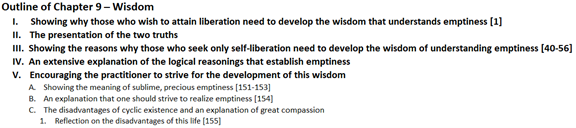
Modern Bodhisattva’s Way of Life: Looking Honestly at Life in Samsara

(9.154cd)Consider that although all people wish for happiness,
They swing between being troubled by suffering

(9.155) And being overjoyed by meaningless pleasure.
Not finding happiness, they suffer; and in striving to fulfil their wishes
They quarrel, fight, and hurt each other with weapons.
Thus, they consume their lives in the commission of non-virtue.

This is a pretty fair description of our modern life. All of us wish for happiness. We all wish to be free from suffering. We all do our best. Sometimes we have good moments. But most of our life is struggling through one problem or another. Wave after wave of personal calamity confront us. We are not alone in this. Everyone is going through similar suffering each in their own ways. Because most of us do not know about the sublime happiness that is possible from within, we chase after the fleeting pleasures of samsara, hoping that they will bring us some respite from our otherwise difficult existence.

For most people, going on vacation is one of the highlights of their year. They save up all sorts of money to try go on vacation. But when they go, their family complains the hotel or food is not good enough, the sun is too bright and we get a sunburn, there are too many people around us, and we feel as if we’ve spent all this money and done all of this effort to try have a good time, and everybody is still unhappy. It is about the best we get in this world. It is really quite sad.

In our work, we fight with others, jockey for position, complain about our boss or our clients. We get passed over for promotion, we never feel appreciated, or maybe our business gets wiped out by the competition.

In our personal life, we never find the one who makes us happy. We expect others to do the right thing, and when they don’t we feel disappointed or let down or even angry. If we are all alone, we think we need to be with others to be happy. But then when we are with others, they are never happy, and so we spend all of our time trying to help them be happy but never succeeding.

We spend our whole working life planning for retirement, but then when our retirement comes, we are too old or too sick to enjoy ourselves, and the enjoyments we thought we would have never quite turn out to be as good as we had hoped. As we get older our best friends get sick and die, and we are left with empty voids. Our body becomes more fragile, weaker, and it increasingly fails. It hurts everywhere and we are never able to get comfortable. We gradually start doing less and less because we are simply incapable of doing so, and we realized with sadness we will never be able to do these things again.

On our deathbed all the things that we had hoped and worked for wind up being meaningless and useless and we realize that we wasted our life chasing after things that provide no real happiness and no real protection. This is not a fiction, nor a horror story, this is all quite common. This is daily life in the human realm. And the human realm is one of the best possible places to be just imagine sufferings of other realms.

Our Vows Are Promises We Can Train In:

Their practice is, when confronted with a tendency to break or neglect the promises, reminding ourself why we made these promises and working through the delusions and negative karma that prevent us from keeping them.

Their primary function is to maintain the uninterrupted continuum of our spiritual path until we attain the final goal. The level of the promise – from refuge, to pratimoksha, to bodhisattva, to our tantric vows – determines the speed with which we complete the path, like water moving through an increasingly narrow hose. Their secondary function is to help us overcome all gross distractions, which is the basic foundation of training in concentration. This in turn enables us to successfully meditate on the Dharma and in particular on the wisdom realizing emptiness that purifies our mind of all delusions and their imprints, thus taking us to the cities of liberation and enlightenment.

Our refuge promises are essentially to (1) to make effort to receive Buddha’s blessings, (2) to make effort to put the Dharma into practice, and (3) to make effort to turn to the Sangha for help. Our pratimoksha promise is essentially to refrain from harming living beings, both ourself and others. Our bodhisattva promise essentially is to not stop until we become a Buddha, in particular through the practice of the six perfections. Our tantric promise is essentially to maintain pure view of ourself, others, our environment, and our activities out of compassion for all living beings. More details can be found in Joyful Path, the Bodhisattva Vow, Universal Compassion, and Tantric Grounds and Paths.

Our most important vow is our heart commitment to Dorje Shugden. This maintains the uninterrupted continuum of our finding the uncommon Kadampa path of the Ganden Oral Lineage instructions, the quickest path to enlightenment of them all.

Within the scope of the heart commitment, I would say there are both common and uncommon promises. The common promises are to (1) cherish the Kadam Dharma, (2) to practice the Kadam Dharma purely without mixing it with other traditions, (3) to share the Kadam Dharma purely without mixing it with other traditions, and (4) to make effort to cause the pure Kadam Dharma to flourish throughout the world.

There are two uncommon promises within our heart commitment to Dorje Shugden. The first is to make the promise to attend every major Kadampa festival (Spring, Summer, and Fall) either in person or on-line between now and at least 2099 (but really, for as long as they last). This functions to preserve the NKT globally for generations to come.

The second uncommon promise of our heart commitment is to keep the Kadampa moral discipline of the Internal Rules of the NKT. These are required if we want to be a Resident Teacher or a center administrator, but are also available to any practitioner. VGL has said they are our most important moral discipline. They are the pinnacle of our Kadampa moral discipline and are taken on the foundation of all the other promises.

None of these promises are imposed upon us from the outside, but are taken freely by the practitioner based upon a clear wisdom that understands benefits of keeping these promises and the dangers of breaking them. All of these promises are worked with gradually and have many levels. When we break them, we can purify the downfall and restore them within our mind. We can do this daily.

We are so lucky to even know of these things, much less have the opportunity to train in them. I would say they are true wishfulfilling jewels.

A Pure Life: Do not Steal

This is part six of a 12-part series on how to skillfully train in the Eight Mahayana Precepts.  The 15th of every month is Precepts Day, when Kadampa practitioners around the world typically take and observe the Precepts.

The object of stealing is anything that someone else regards as their own.  This includes other living beings.  If we take something that no one claims to possess, the action of stealing is not complete.  Like with killing, the intention must include a correct identification of the object of stealing, a determination to steal, and our mind must be influenced by delusion, usually desirous attachment, but sometimes out of hatred of wishing to harm our enemy.  It can also sometimes be out of ignorance thinking such stealing is justified such as not paying taxes or fines, or stealing from our employer, downloading pirated music or videos, etc.  Stealing also requires preparation.  It may be done secretly or openly, using methods such as bribery, blackmail, or emotional manipulation.  Finally, it must also include completion.  The action is complete when we think to ourself ‘this object is now mine.’

In modern life we have countless opportunities to steal and we often take advantage of most of them.  Common examples include not giving money back when we have been given too much change at the store, accidentally walking out with some good we didn’t purchase and not making an effort to go back and pay for it, stealing work supplies from work for our personal use, stealing our employers time by doing personal things on company time beyond what is conventionally acceptable in your work place (most work environments allow you a limited amount of personal administrative time.  The point is do not go beyond what is intended by your employer).  Another very common form of stealing is lying on our taxes so that we pay less arguing our government is wasteful.  We come up with all sorts of justifications for why this is OK, but it is still stealing. 

Stealing can also include saying certain clever things to cause something to come to us when it would otherwise normally go to somebody else.  One of the most common forms of stealing these days is downloading pirated music or videos, or copying and using software we didn’t pay for.  Again, our rationalizations for such behavior know no limits, but it is still stealing.  The test for whether we are stealing or not is very simple:  if we asked the other person would they say its legitimately ours?  If not, it was stealing.

Stealing is incredibly short-sighted.  Anybody who feels tempted to steal should take a few hours driving through a really poor neighborhood or they should go visit a very poor country or watch a documentary on global poverty.  You can find plenty of material just on YouTube.  When we see these things, we should remind ourselves that this is our future if we steal.  When we steal, we create the causes to have nothing in the future.  Giving is the cause of wealth, taking is the cause of poverty.  It is as simple as that.  Why are Bill Gates and Warren Buffet so rich?  Because they have the mental habits on their mind to give away everything.  Because they did this in the past, they became incredibly rich in this life.  Because they are again giving away all of their wealth, in future lives they will again be incredibly rich.  Just as they are external philanthropists, a Bodhisattva is an inner philanthropist.  We seek vast inner wealth so that we can have even more to give away.

There are also many subtle forms of stealing that occur due to the way we have structured our economy. As many of you know I am in economist by training. I very much believe in free markets as the least bad way of organizing an economy. However, the optimal effects of the market only occur when there is what is called perfect competition. When there is perfect competition, excess profits are competed away and both consumers and producers are as good off as they could possibly be on the aggregate. But when markets are not perfectly competitive, markets do not produce optimal results. For example, if a company has a monopoly on the sale of a certain good that everybody needs, it can charge extraordinarily high prices and people will be forced to pay. The company intentionally restricts production to drive the prices higher than would otherwise exist in a perfectly competitive market. As a result, they extract a surplus in profit not due to the quality of their product, but rather by virtue of their market power. Extracting this surplus profit is a form of stealing from the consumers and also from society as a whole because not as much of the good is produced as would otherwise be the case.  It is beyond the scope of this blog to outline them, but there are many examples of market power being used for selfish purposes. 

At a personal level, the point is we need to be aware of the situations in which we have some form of market power over others and to not take advantage of our more powerful position to extract greater profits then we are justifiably due. If we fail to do this, it is a form of stealing. Likewise, if we live in a society in which corporations have disproportionate power and enjoy political protection for their monopolistic behavior, if we vote for or lend political support for such policy knowing that it is a form of stealing, then we are also engaged in a subtle form of stealing. The point is this, we live in a society and we have a say in how that society is run. If we use our political power for selfish purposes or to support those who do so, then are these not karmic actions that have karmic effects? This is not mixing Dharma with politics; this is understanding that the actions we engage in have effects on those around us and we must take that into account when choosing our actions.  I would not say that all of this is a violation of our Mahayana precept to abandon stealing, but it is once again a directional question. Are our actions moving in the direction of stealing or are they moving in the direction of not stealing. That is the question.

On Putting the Meaning of Dharma into our Own Words:

Sometimes people get very nervous when they hear or read Dharma being expressed in ways not explicitly articulated by VGL. Often people will say things like, “where does VGL say that,” or “you are creating confusion,” or worse they will make accusations that you are inventing your own lineage.

I understand these concerns, there are many legitimate issues that need to be navigated carefully. As modern Kadampas we need to 100% ground everything we do in what VGL has taught us. His words are perfect and were meticulously selected, so putting things a different way can lead to confusion, especially if we are wrong in how we put it. And we certainly are not qualified to create our own lineage and don’t want anybody to rely upon us over the one and only Guru of our lineage for all time – Guru Sumati Buddha Heruka.

But it is an extreme to think the meaning of Dharma can only be expressed with VGL’s exact words or formulations. It is an extreme to be a Dharma parrot. For example, he didn’t speak French or Spanish or Mandarin, yet our books are all translated into these languages. Translating Dharma has been an essential component of how the lineage gets passed on through the generations, such as the great Tibetan translators who went to India, learned Sanskrit, and sent the Dharma back.

Translating Dharma is not just from one world language to another, but occurs at a micro level all the time – for example, how we would explain the Dharma to a transgender scholar from Harvard might be different than to a die hard so-called football hooligan from Manchester. How we explain it to a grandmother might be different than to a young monk. We each live in a different linguistic circle where ideas and meanings are coded in different words, so it is entirely normal that the meaning of Dharma will be expressed differently in different contexts. Not only is this not something to be feared, it should be embraced as how we make the Dharma available to all the myriad different types of being in this world.

Indeed, VGL warns about this in Clear Light of Bliss where he explains “In the teachings on the four reliances, Buddha gives further guidelines for arriving at an unmistaken understanding of the teachings. He says: Do not rely upon the person, but upon the Dharma. Do not rely upon the words, but upon the meaning. Do not rely upon the interpretative meaning, but upon the definitive meaning. Do not rely upon consciousness, but upon wisdom.” He goes on to say, “If we understand these four reliances and use them to evaluate the truth of the teachings we receive, we will be following an unmistaken path. There will be no danger of our adopting false views or falling under the influence of misleading Teachers. We will be able to discriminate correctly between what is to be accepted and what is to be rejected, and we will thereby be protected against faults such as sectarianism.”

In other words, what matters is not the exact words we use, but whether the meanings our words transmit are pure Dharma. The meaning is unchanging all the way back to Buddha, but how that meaning gets expressed will vary over time and from one micro-cultural corner to another.

VGL explained when he first taught Modern Buddhism at a Summer Festival that our job is to “attain the union of Kadampa Buddhism and modern life.” He went on to explain he has given us the pure Kadam Dharma, but we know modern life. Our job therefore is to attain this union. This is how we make the Dharma available to everyone in this world and pass it on to future generations. The Dharma is not just the words he uses, it is the meanings he is transmitting. If we get stuck just using his words, fearing any formulation he didn’t explicitly use, we risk not only obstructing the Dharma from spreading far and wide in this world, but also falling into the extreme of sectarianism, or worse having the lineage die prematurely.

Our job is to emulate VGL’s example. A huge part of his example is he took the pure meanings of Je Tsongkhapa as taught in ancient Tibet and then repackaged them in a way that the people of the modern world could accept and understand. Atisha did the same in his time. VGL helped separate what was culturally ancient Tibetan from what is pure Dharma and then presented it in a way that can be understood and practiced by the people of the modern world. We must do the same and continually do so generation after generation – always remaining entirely loyal to the pure meanings of our Spiritual Guide, free from the extremes of inventing our own lineage and restricting ourselves to being a Dharma parrot of his words.

This is true even at the level of our own individual meditations. Listening to Dharma is understanding our guru’s words. Contemplating the Dharma is making that understanding our own – in other words, putting it into our own words that transmit that meaning perfectly within our own mind. Sharing the Dharma is then either sharing our understandings in our own words or – even more advanced – translating those meanings into words that other people can understand based upon where their minds are at.

But please don’t misunderstand. Of course VGL’s words are unbelievably precious and what we need to ground all of our Dharma understandings in. We should absolutely memorize his words. At one point, he suggested we memorize all of Joyful Path and Modern Buddhism. I would absolutely love to do that. Becoming familiar with and memorizing his words is the essential foundation for the wisdom arising from listening (or reading). Without that, we can’t even get to the next wisdom, namely the wisdom arising from contemplation. My only point is we should not stop at just memorizing his words, we need to go deeper still and then also put his words into our own words without losing the meaning at all. Then, we need to learn how to put these meanings into words others can understand, again without losing the meaning at all. So everything we are normally saying, and then further. It’s not either/or, it’s both.

Yes, I agree, we need to be very careful. There are many pitfalls, traps, and dangers here. But these risks cut in both ways – both the risk of transmitting wrong understandings, creating confusion, or inventing our own lineage and of becoming a Dharma parrot, obstructing the Dharma from spreading far and wide, becoming sectarian, or causing the lineage to die prematurely. As with all things, our job is to try find the middle way.

Happy Tsog Day: Putting Others First in Thought and Deed

In order to remember and mark our tsog days, holy days on the Kadampa calendar, I am sharing my understanding of the practice of Offering to the Spiritual Guide with tsog.  This is part 31 of a 44-part series.

Exchanging self with others

In short, since the childish are concerned for themselves alone,
Whereas Buddhas work solely for the sake of others,
I seek your blessings to distinguish the faults and benefits,
And Thus, be able to exchange myself with others.

Since cherishing myself is the door to all faults
And cherishing mother beings is the foundation of all good qualities,
I seek your blessings to take as my essential practice
The yoga of exchanging self with others.

To exchange our self with others means to cherish only other living beings. This mind is the natural conclusion of the previous contemplations. If there is no advantage and only suffering that comes from cherishing ourselves and only advantages and happiness that comes from cherishing others, it follows that we should not cherish ourselves at all and cherish only others.

We might object, “if we do not cherish ourselves at all then who will take care of us?” The answer is we do not need to cherish ourselves to take care of ourselves. It is perfectly possible to take care of ourselves – feed our body, get adequate rest, and meet all our other needs – for the sake of cherishing others. For example, if we starve or become sick because we are not caring for ourselves, then we are not able to help others. Indeed, the mind of bodhichitta, which we will discuss later, seeks to acquire every good quality for the sake of others. There is no contradiction whatsoever between improving ourselves, taking care of ourselves, and cherishing only others.

How can we generate the mind of exchanging self with others? As with abandoning self-cherishing and cherishing others, it suffices for us to contemplate the advantages of doing so and then make the determination to cherish only others. The more familiarity we gain with this determination, the more our behavior will become consistent with it. Fundamentally it is simply a question of familiarity. We need to make effort every day, month after month, life after life, to come to cherish only others. With familiarity this mind will come. Once it does, as explained before, enlightenment will naturally follow.

In chapter eight of Guide to the Bodhisattva’s Way of Life, Shantideva explains a special method for generating the mind of exchanging self with others. He encourages us to identify with people who we normally generate pride, competitiveness, or jealousy towards. We put ourselves in their shoes and look back upon our old self. For example, we usually generate pride towards someone who we think is inferior to us in some way. When we put ourselves in their shoes and look back at our arrogant old self, we can see very clearly our selfish and deluded behavior and can realize what the other the person needs from us. Seeing ourselves from the perspective of others is a powerful way for undermining and ultimately destroying our self-cherishing attitude.

According to Highest Yoga Tantra, we can exchange self with others by simply imputing our “I” onto all living beings thinking that we are now them. And then we can impute “other” onto our old self. On the basis of these new imputations, we cherish our new self and can completely neglect our old self. All these practices can give rise to misinterpretations of what it means, but if we put the instructions into practice sincerely and try approach it in the way it was intended, we can naturally overcome these doubts and hesitations.

Taking and giving

Therefore, O Compassionate, Venerable Guru, I seek your blessings
So that all the suffering, negativities, and obstructions of mother sentient beings
Will ripen upon me right now;
And through my giving my happiness and virtue to others,
May all migrating beings be happy.  (3x)

This is the only verse in the practice of Offering to the Spiritual Guide that has five lines. Geshe-la explains in Great Treasury of Merit this is to indicate the special importance of this practice. In Universal Compassion, Geshe-la explains that the practice of taking and giving is the synthesis of our Lojong trainings. All the previous meditations on exchanging self with others, great compassion, and wishing love all find their final conclusion in the practice of taking and giving.

The practice here is quite simple: first we generate a mind of compassion for all living beings, and then we generate the superior intention to ourselves protect others from their suffering. With this mind, we then imagine we take on all the suffering of others in the form of black smoke which comes to our heart and destroys our self-cherishing mind completely. We then generate a mind of wishing love, wishing that others experience only pure happiness, and we once again generate a superior intention to assume personal responsibility to help others be happy. We then imagine that from our heart infinite light rays radiate out in all directions bestowing upon all living beings pure and everlasting happiness. Imagining that we have taken away all their suffering and bestowed upon them perfect happiness, we then generate a mind of joy strongly believing that we have done so.

The doubt may arise that we have not actually taken on the suffering of others or given them happiness. This doubt then prevents us from generating joy, feeling that we have not engaged in the practice. There are several lines of thought we can use to overcome this doubt. First, others do not inherently exist. They are not inherently suffering, nor are they inherently unhappy. That is simply how they are appearing to us based upon our past karma with them. The practice of taking and giving is similar to our tantric practices of bringing the result into the path. Engaging in the practice of taking and giving creates a new karma which causes the beings of our karmic dream to appear to be free from suffering and experiencing everlasting happiness. This is a way of karmically reconstructing the empty beings of our dream. Second, we do not generate joy believing others have been freed from their suffering and so forth because we believe they inherently have, rather we generate joy because strongly believing we have done this is how we complete the mental action of taking and giving. In other words, generating the mind of joy believing we have taken on their suffering and bestowed upon them happiness is how we complete the mental action of taking and giving, which then gives us all the karmic benefits of the practice.

We can engage in the practice of taking and giving at any time. One powerful way of doing this is to mount the practice of taking giving upon the breath. As we inhale, we imagine that we take on all the suffering of living beings. And as we exhale, we imagine that we bestow upon others everlasting happiness. There is a close relationship between our breath and our mind. If we mount the virtuous practice of taking giving upon our breath, it will function to purify our inner energy winds. If our inner energy winds are purified, then our mind will naturally also become purified.

Happy Tara Day: Tara can dispel all outer and inner obstacles

This is the sixth installment of the 12-part series sharing my understanding of the practice Liberation from Sorrow.

Praising Tara by her divine actions of dispelling conflicts and bad dreams

Homage to you who are honoured by the kings of the hosts of gods,
And the gods and the kinnaras.
Through your joyful and shining pervasive armour
All conflicts and bad dreams are dispelled.

These are particularly practical ways we can rely upon Tara.  We all, from time to time, experience conflict and bad dreams in our life.  Every time we find ourself in some sort of conflict, we can recall Tara’s swift ability to dispel conflicts, and recite her mantra with strong faith requesting that she do so.  Ultimately, all conflict is sustained by anger, attachment, and self-grasping – in either ourself of those we are in a conflict with (usually both).  When we recite her mantra, we should request that she dispel the inner causes of our conflict from all concerned.  For myself, much of my work revolves around the U.S.-China relationship, which is obviously plagued by different types of conflict.  To help dispel this conflict, I try generate pure view of my work and those I encounter as emanations of Tara and request that through them both, all conflict between China and the United States can be dispelled. 

Tara is also helpful for dispelling bad dreams.  When I was very young, I had a few particularly scary bad dreams, and became terrified of having more.  Every night when I would go to sleep, I would pray, “please please please please (repeated millions of times) protect me from bad dreams.”  It actually worked, and after I started praying like this when I went to bed, I had very few bad dreams.  Later, when I became a father myself, my kids started having bad dreams, and I taught them Tara’s mantra and gave them small Tara statues to hold in their hand as they went to sleep to protect them against bad dreams.  Their bad dreams became much less afterwards, almost without fail.

Praising Tara by her divine actions of dispelling diseases

Homage to you whose two eyes, like the sun or the full moon,
Radiate a pure, clear light.
Saying HARA twice and TUTTARA,
You dispel the most violent, infectious diseases.

When the Coronavirus first broke out, Geshe-la advised Kadampas around the world to do Tara practice due to her power to dispel violent, infectious diseases.  Some centers did 24-hour Tara pujas on Tara day every month for some time.  The way these work is every four hours, one engages in the Liberation from Sorrow sadhana, and recites the praises to the twenty-one Taras seven times each session.  While it is true the coronavirus still spread all over the world, we cannot say it would not have spread worse if such actions were not performed.  If we have faith in Tara, there is no doubt that such actions help and perhaps saved many, many lives. 

Praising Tara by her divine actions of subduing evil spirits and zombies

Homage to you who have the perfect power of pacifying
Through your blessing of the three thatnesses;
Subduer of the hosts of evil spirits, zombies and givers of harm,
O TURE, most excellent and supreme!

In many ways, this verse is like the summary of all of the previous verses.  It refers to her power to pacify, bestow blessings (in particular of the wisdom realizing emptiness, or thatness), and subdue outer and inner obstructions.  She truly is most excellent and supreme!

This concludes the praise of the root mantra
And the twenty-one homages.

Normally, we talk of these praises as to the twenty-one Taras, but here we are also reminded that these are also praises of Tara’s mantra.  In Buddhism, we often describe things as existing at gross, subtle, and very subtle levels.  Green Tara is the gross deity, her mantra is like a subtle emanation of Tara, and the Dharmakaya is the very subtle version of Tara.  In this way, we can understand the mantra as like a bridge between the Tara we normally know and definitive Tara.  With sufficient faith in and understanding the nature of the mantra, reciting the mantra has exactly the same function and power as reciting the twenty-one homages. 

Benefits of recitation of this Sutra

The wise who recite this with strong faith
And perfect devotion to the Goddess,
In the evening and upon arising at dawn,
Will be granted complete fearlessness by remembering her.

A qualified mind of refuge has two main parts, fear of samsara and faith in the three jewels.  Normally, we don’t have much difficulty generating faith, but for our faith to have any meaning, it must be informed by an appropriate fear of samsara.  Without this, our Dharma practice just becomes feel-goodism.  But with healthy wisdom fears of samsara and faith in the three jewels, we are pushed to engage in Dharma practices, such as relying upon Mother Tara.  Through this we attain fearlessness in two ways.  First, because we will have a powerful protector at our side; and second, because we will gain inner Dharma realizations, which provide us with permanent protection from all suffering.  In particular, we need the wisdom that knows how to transform adversity into the path to enlightenment.  Normally we fear things that can harm us.  Most of samsara’s sufferings can harm us only because we don’t know how to transform experiencing them into causes of our enlightenment.  But through relying upon Tara, we can gain this wisdom, and then we will have nothing to fear.  We receive this protection merely “by remembering her” because wherever you imagine a Buddha, a Buddha actually goes; and wherever a Buddha goes, they perform their function, which is to bestow blessings.  In other words, by merely remembering Tara, she comes swiftly to our side and then blesses our mind to gain wisdom realizations.  The sadhana says we need to rely upon her with perfect devotion.  What does that mean practically?  It means we move beyond simply having faith in her to actively working to accomplish her wishes in the world.  Somebody who is devoted moves beyond inner faith to practical action.  Tara’s main wish is for the pure Kadam Lamrim of Atisha to flourish throughout the world, both externally and internally.  If we are to enjoy complete fearlessness, we need to not only rely upon her, but to actively devote ourselves to realizing her pure wishes.

Through the complete purification of all negativity
They will destroy all paths to the lower realms.
They will swiftly be granted empowerment
By the seventy million Conquerors.

The cause of lower rebirth is negative karma on our mind.  The quality of mind we generate at the moment of our death determines the quality of our next rebirth – a negative mind will activate negative karma resulting in a lower rebirth, a positive mind will active virtuous karma resulting in an upper rebirth, and a pure mind will active pure karma resulting in a rebirth outside of samsara.  Avoiding a negative mind at the time of death will help protect us from a lower rebirth, but the only way to destroy all paths to the lower realms is through the complete purification of all our negative karma.  If we have no negative karma remaining on our mind, even if we generate a negative mind at the time of death, there will be no negative throwing karma to activate and it will be impossible for us to take lower rebirth.  Tara’s blessings can help us purify swiftly all of our negative karma, and we can recite her mantra as a practice of purification similar to Vajrasattva practice. 

Relying upon Tara also creates the causes for us to receive the empowerments of all the Buddhas.  What is an empowerment?  During an empowerment, our Spiritual Guide places within our mental continuum a personalized emanation of the deity who will remain with us between now and our eventual attainment of that deity.  This emanation is our personal yidam, or personal deity.  By virtue of this emanation, we can gradually learn to identify with the pure body and mind of the deity and gain the ability to use these as if they were our own.  Tara is the mother of all Buddhas, and all Buddhas respect and are devoted to their mother.  When we rely upon Tara, all of her children – the Buddhas – then come into action to help fulfill their mother’s wish for us.  They do so by granting us empowerment.